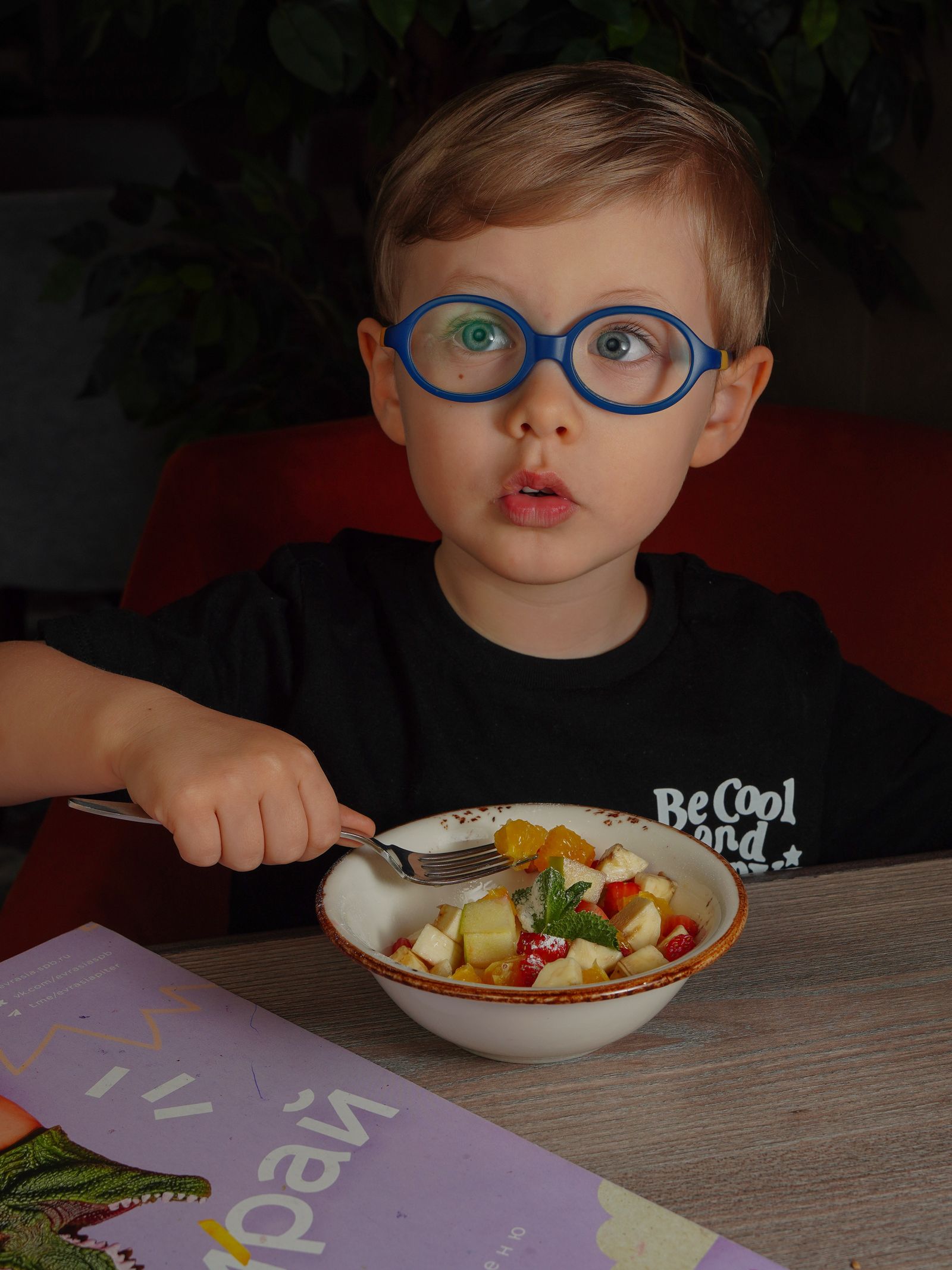
Children rarely say their vision is blurry — they simply adapt. The signs are behavioral, and the school nurse will not always catch them.
Dr. Amy Krempecki, O.D.
·April 22, 2026·5 min read
A child who has never seen the world clearly does not know the world should look any other way. That is the entire problem with pediatric vision: kids are excellent at compensating, and adults are easy to fool.
Most of the parents who bring a child to us for a first exam say something like, "I never would have known — she just started covering one eye to read." That is the pattern. The information arrives sideways: not a complaint, but a small behavior that does not quite fit. Here is what to listen for, and what to do if the pieces start adding up.
The behavioral signs that matter most
None of these are emergencies on their own. Together, or persistent, they are worth a comprehensive exam.
Squinting at the TV, the chalkboard, or the menu board at Bogart's. Squinting is a free pinhole — it sharpens a blurry image briefly, and kids do it without realizing.
A consistent head tilt when looking at something, especially while reading. Tilts can mean an astigmatism, an eye-muscle imbalance, or an attempt to use the better eye.
Sitting unusually close to a tablet, TV, or book. The general rule: if the screen is closer than the child's elbow-to-fingertips length, something is off.
Eye rubbing after homework or screen time, especially if it comes with headaches at the temples or forehead.
Losing place when reading aloud, skipping lines, or using a finger to track well past the age that should have stopped.
"I don't like reading" from a child who otherwise loves stories. Avoidance is often the first symptom of a focusing or alignment problem.
Covering or closing one eye to read or watch, even occasionally.
One eye that drifts in, out, up, or down — even just sometimes, even just in photos taken in low light.
Falling grades or a teacher's note mentioning attention. We have seen many children labeled distractible whose only problem was a prescription.
Sitting unusually close to a screen or book is one of the most common quiet signs in children five through ten.
What kids almost never say
They almost never say "my vision is blurry." They will sometimes say their eyes are tired, or their head hurts. A child who has been farsighted from birth has no reference point for sharp — the soft world is just the world. Even significant amblyopia ("lazy eye") often goes unmentioned because the strong eye does the seeing without complaint.
Parents who walk in with the right hunch are usually responding to a pattern, not a single moment. If you have noticed two or three of the signs above, you are almost certainly seeing something real.
Why a school screening is not enough
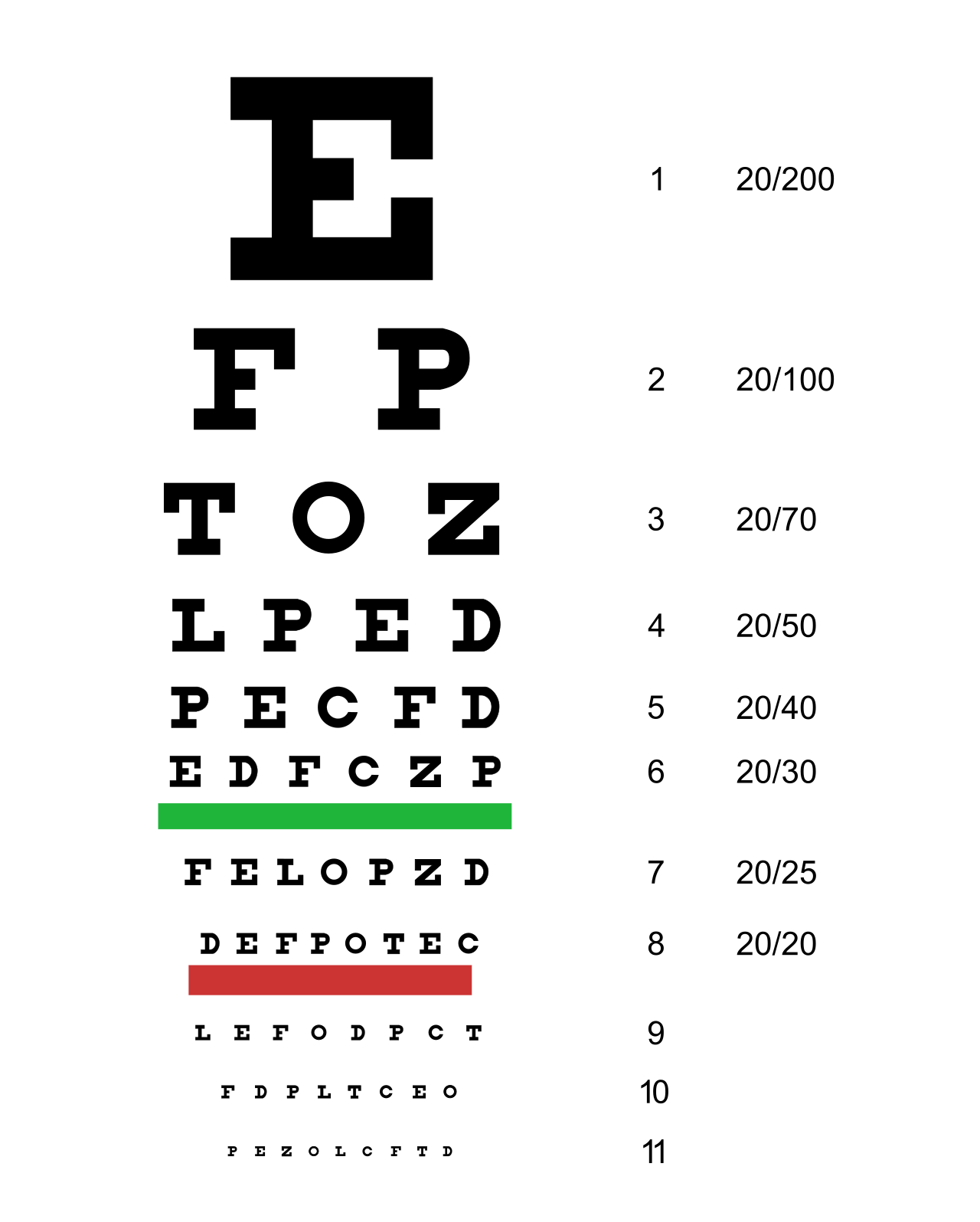
This is the part we wish every Haywood County parent understood. A school screening is a quick distance acuity check — twenty feet, one eye covered, an E-chart or letters. It is useful for catching significant nearsightedness, and that is mostly what it catches. It commonly misses farsightedness, astigmatism, focusing problems, binocular vision dysfunction, amblyopia, and any sign of eye disease.
A school screening reads a chart like this — useful, but it catches only one part of how a child's eyes work.
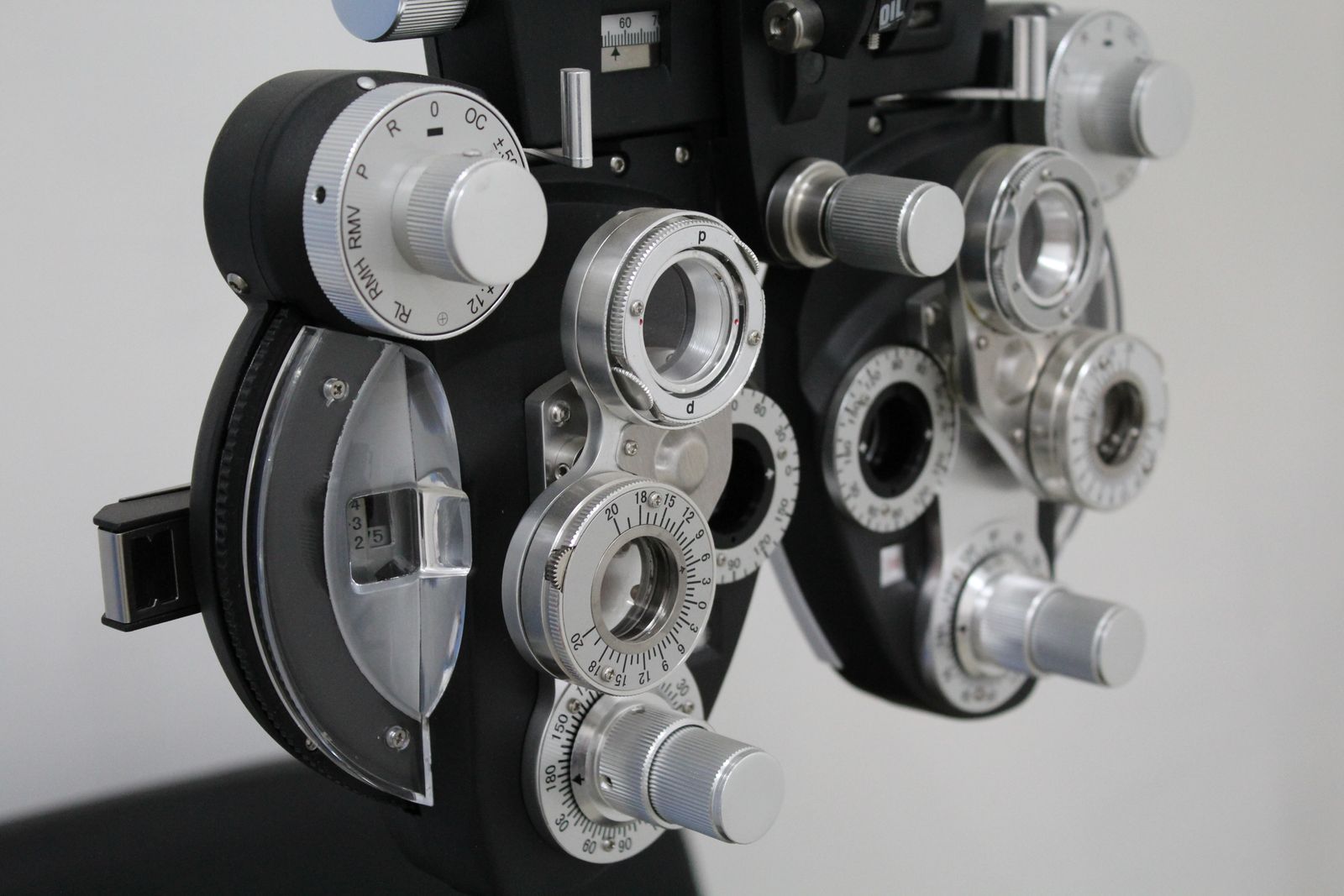
A comprehensive exam is different. We measure refraction objectively (no responses required), evaluate alignment and focusing, look at the health of the optic nerve and retina, and check that both eyes work together. It takes thirty to sixty minutes and answers the questions a screening cannot.
When to come in — and what an exam looks like
The American Optometric Association recommends a first comprehensive exam between six and twelve months, another at age three, and one more before kindergarten. After that, every one to two years through age eighteen. Family history of strabismus, amblyopia, or high prescriptions can move all of those up.
If your child is in school and has never been in for a comprehensive exam, this is the time — even if a screening said "20/20." Our pediatric rooms are deliberately calm: soft lighting, picture targets on the walls, no fluorescent buzz. We move fast and playful with little ones, explain everything to school-age kids so they feel in control, and parents stay in the room throughout.
Booking your child's exam
If the patterns above sound like your child, you can schedule online anytime, or call (828) 456-8361 and ask for a pediatric appointment. Most of our patients are neighbors — we will not rush, and we will tell you exactly what we found in plain English.
The Blue Ridge gives kids a lot to look at. We would love to make sure they actually see it.
About the author
Dr. Amy Krempecki, O.D.
Dr. Krempecki completed her optometry degree at the Pennsylvania College of Optometry at Salus University and a residency in Child and Family Optometry in Wichita, Kansas. She leads pediatric care at Haywood Family Eye Care and also manages diabetic retinopathy, dry eye, AMD, and glaucoma. Outside the clinic she lives in Waynesville with her husband John and son Sebastian.