Daily, monthly, or extended-wear: which contact lens schedule fits your life?
An honest comparison from someone who fits a lot of contacts — including the cost-per-day math and the case for dailies if you are anything like the rest of us.
Dr. Weronika Przepiora, O.D.
·March 12, 2026·6 min read
The right contact lens is not the one with the prettiest packaging or the lowest sticker price. It is the one your eyes still tolerate at 9 p.m. on a Friday after a long workweek — and the one you actually replace on schedule. Here is the honest version of that decision.
I fit a lot of contacts at this practice. Across daily disposables, two-week and monthly lenses, and the specialty rigid and scleral lenses I handle for harder-to-fit eyes, the same conversation comes up over and over. So let's lay out what you are really choosing between, what each schedule does to your eyes, and which patient fits where.
The three real options
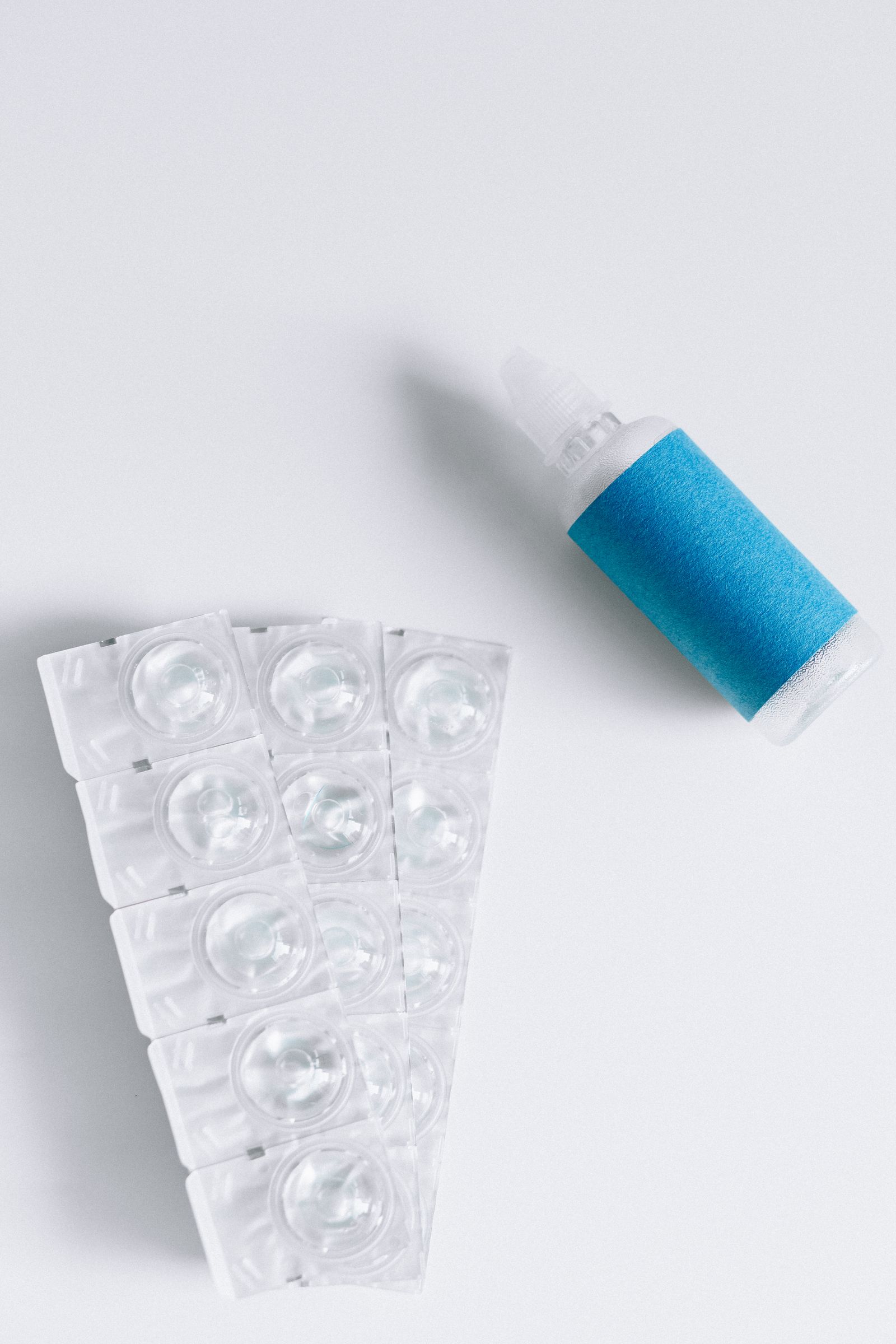
Daily disposables. A fresh lens out of a sealed blister pack every morning. Tossed at the end of the day. No solution, no case, no buildup.
Monthly (or two-week) replacement. One lens worn during the day, cleaned and stored in fresh solution every night, replaced on a schedule. Cheaper per day, more upkeep.
Extended-wear / continuous-wear. A lens FDA-approved to be slept in for up to six (sometimes thirty) consecutive nights. Convenient on paper, riskier in practice.
The honest case for dailies
If price were no object, almost every contact lens patient in our chairs would wear daily disposables. The reasons are mundane but real.
Cleanest surface, every time. Deposits — protein, oils, makeup, pollen — build up on contacts the same way film builds on a windshield. Dailies start over every morning. Monthlies accumulate.
Lower infection risk. The single biggest predictor of contact-lens-related microbial keratitis is poor case hygiene. Dailies have no case.
Better for allergies and dry eye. A fresh lens means yesterday's allergens are not still on the lens surface today. For our patients who spike in ragweed season, dailies often make the difference.
The lazy-patient math. If you are honest with yourself and admit that you sometimes wear a "monthly" for six weeks because you forgot — dailies are the safer answer. A monthly worn past its replacement date is a worse lens than a five-dollar daily.
A fresh lens out of a sealed blister every morning — no case, no solution, no compounding deposits.
The honest case for monthlies
That said, monthlies are not bad. They are the right answer for several patient types, and modern silicone hydrogel monthlies (CooperVision Biofinity is a great example) are far healthier than the monthlies of fifteen years ago.
Cost. A year of monthlies generally lands between $200 and $350. A year of dailies more often lands between $500 and $850 — sometimes more for astigmatism or multifocal options. For a steady, reliable wearer, that gap is significant.
Comfort consistency for high prescriptions. Some very high or unusual prescriptions are available only in monthly molds. We fit you with what is available, not with what is convenient.
Strong existing routine. If you already brush, floss, wash your face, and rinse your case every night without thinking — monthlies are a fine choice. The hygiene routine is the whole game.
The cost-per-day reality
Patients are surprised by this math because the cost difference is smaller than it looks. Quick napkin numbers, full-time wear, typical prescriptions, not adjusting for insurance benefits:
Daily disposables: roughly $1.50 to $2.30 per day. About $550 to $850 per year.
Monthlies + solution: roughly $0.55 to $0.95 per day. About $200 to $350 per year, with solution.
The hidden cost of overwear. A patient who wears monthlies for six weeks instead of four is buying more eye problems. The cost of one corneal infection — co-pays, drops, missed work — easily eclipses two years of the daily-versus-monthly delta.
Extended-wear: convenient on paper, expensive in eye health
Sleeping in contacts increases your risk of microbial keratitis by roughly five to ten times compared to daily wear. Even FDA-approved continuous-wear lenses are not without that risk. The cornea needs oxygen, and tear exchange under a closed lid with a lens on it is much lower than it is in open-eye conditions.
A small case, a clean routine, and a backup pair of glasses — the whole infrastructure of safe contact wear.
I fit extended-wear lenses occasionally, mostly for shift workers, new parents, or first responders for whom an emergency 3 a.m. wake-up to put in contacts is the actual safety hazard. For everyone else, I steer toward daily wear with a clear "never sleep in these" rule.
The non-negotiables, no matter what you wear
Never top off old solution. Empty the case, rinse with fresh solution, refill. Bacteria love stale solution.
Replace the case every three months. Biofilm builds up on the inside no matter how well you rinse.
Take them out for swimming and showering. Tap water and pool water both carry organisms that can cause vision-threatening infections.
Have a current pair of glasses. If a lens hurts, take it out. Wear glasses. Call us.
Annual contact lens evaluation. Different from a routine glasses exam. We need eyes on the cornea while you are still wearing the lens.
Booking a fitting
If you have never worn contacts and want to try, or your current lenses feel like they used to and don't anymore, this is what we do. Schedule online or call (828) 456-8361 and ask for a contact lens fitting. If you are already a patient and want a refill, our online reorder portal will ship dailies or monthlies straight to your door.
The best contact lens is the one that disappears on your eye and keeps your cornea healthy for the next forty years. That is the version of this conversation we want to have with you.
About the author
Dr. Weronika Przepiora, O.D.
Dr. Przepiora earned her Biochemistry degree at the University of Florida — with minors in Disabilities in Society and Spanish — before completing her O.D. at the Southern College of Optometry. She finished her residency in Primary Care and Ocular Disease at the WJB Dorn VA Medical Center, where she sharpened her work in specialty contact lens fitting. Trilingual in Polish, Spanish, and English.