Dry eye in the mountains: why Blue Ridge weather makes it worse.
Wind, elevation, wood-stove heat, and ragweed all conspire against the tear film. Here is why dry eye spikes for our patients in fall and winter — and what actually helps in a Waynesville house.
Dr. E. Aimée McBride, O.D.
·February 15, 2026·5 min read
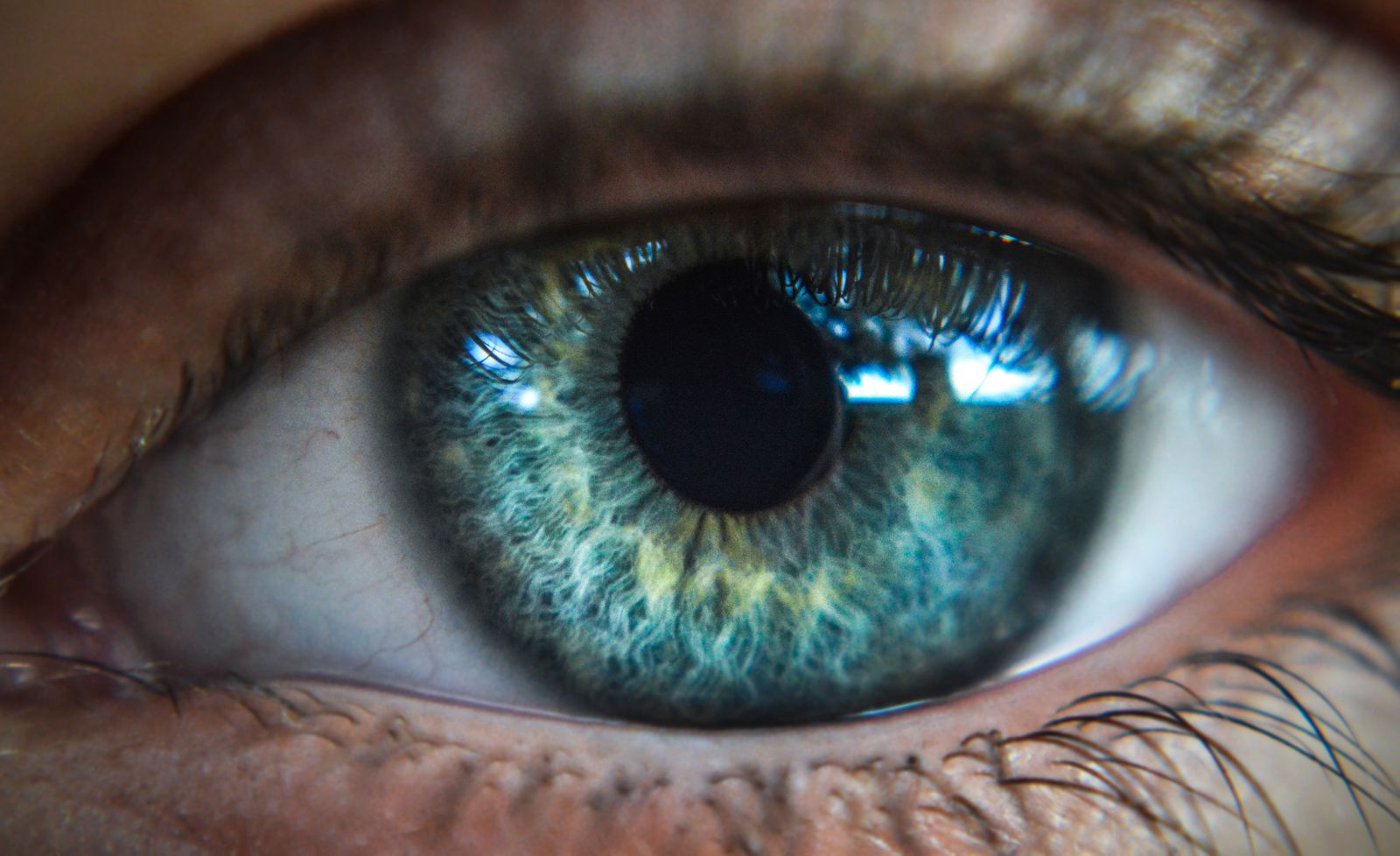
If your eyes burn worse in October than they did when you visited the coast in July, you are not imagining it. Waynesville's climate is a near-perfect storm for dry eye — and most of our patients get worse, not better, the longer they live here.
Dry eye is multifactorial. The tear film has three layers — oil, water, and a thin mucin layer that glues it down — and almost everything about Western North Carolina's environment stresses one of those three. When patients tell us their eyes feel tired by mid-afternoon, sandy in the mornings, or oddly watery (yes, watery; we will get to that), the cause usually lives in the air they are breathing.
What the mountains do to your tear film
Five environmental factors hit at once for the average Haywood County patient:
Elevation. Waynesville sits around 2,750 feet; the surrounding ridges go much higher. Air at altitude is thinner and holds less moisture. Tears evaporate faster.
Wind. Anyone who has stood at the Pisgah overlook in November knows the wind is real. Even moderate breeze across the surface of the eye accelerates evaporation dramatically.
Wood-heat indoor air. A wood stove or pellet stove pulls humidity out of a room the way a desiccant does. By February most of the houses we live in are running at indoor humidity well under thirty percent — comparable to a desert.
Allergens. Tree pollen in spring, ragweed in fall. Allergic conjunctivitis inflames the lids and disrupts the oil layer.
Screens. The same problem everyone has — we blink less than half as often when staring at a monitor. Combine that with the four factors above and you get the perfect dry-eye patient.
Wood-stove and pellet heat dries indoor air faster than almost anything else — by February our patients' tear films are running on empty.
Why your "watery" eyes might actually be dry
This one trips a lot of patients up. When the surface of your eye is irritated, the lacrimal gland — the emergency-tear gland — fires a reflex burst of watery tears. These are not the same as the slow, oily basal tears that lubricate the eye between blinks. They run down your cheek and they do not actually fix anything.
So if you find yourself blotting your eyes outside in cold wind, or first thing in the morning, that is a dry-eye sign more often than not. The fix is not less water — it is restoring the steady tear film underneath.
What helps, ranked by impact
This is the rough order of return-on-effort we coach our patients through. None of it requires a prescription to start.
A humidifier near the wood stove or in the bedroom. The single highest-leverage thing for a mountain household. Aim for 40–50% indoor humidity. Inexpensive hygrometers are accurate enough.
Preservative-free artificial tears, two to four times a day. Stick with single-vial preservative-free options if you use them more than a couple times daily — the preservatives in cheaper drops can themselves irritate the surface.
Warm compresses on the lids for ten minutes in the evening, especially in winter. A microwaved bead-filled mask works better than a washcloth because it holds heat. This melts the thickened oil in the meibomian glands at the lid margin.
Omega-3 fatty acids. Two to three grams per day of high-quality fish oil (or vegan algae oil) has decent evidence for improving the lipid layer of the tear film. It is a slow effect — give it two months.
The 20-20-20 rule on screens. Every twenty minutes, look at something twenty feet away for twenty seconds. It resets blink rate.
Sunglasses outside, even in winter. The wraparound style cuts wind exposure as much as glare.
Cold, dry, breezy — beautiful, but hard on the tear film. Sunglasses in winter are not vanity.
When to come in
If the basics above do not move the needle in four to six weeks, or if your eyes burn enough to interrupt sleep, work, or reading, it is time for a proper dry-eye evaluation. We do not guess. At HFEC we use meibomian gland imaging — a quick infrared scan of the lid margin that shows the structure of the oil glands themselves — alongside tear film osmolarity and a careful slit-lamp exam. Together they tell us whether you have evaporative dry eye (most common around here), aqueous-deficient dry eye, or both.
From there the treatment is tailored. Sometimes it is a prescription drop like cyclosporine or lifitegrast. Sometimes it is an in-office gland expression. Sometimes it is treating an allergy first and watching the dry-eye symptoms resolve on their own.
Booking an evaluation
If this article reads like your last six months, this is exactly what we want to see in the chair. Schedule online anytime, or call us at (828) 456-8361. Mention that you are coming in for dry eye and we will plan the appointment around the right testing.
Living up here is worth it. The eyes will adjust — but they need a little help getting there.
About the author
Dr. E. Aimée McBride, O.D.
Dr. McBride is a co-owner of Haywood Family Eye Care. She graduated at the top of her Biosystems Engineering class at Clemson and finished her O.D. as valedictorian at UAB. Her practice focuses on ocular disease, contact lenses, pediatrics, and refractive co-management. She lives in Waynesville with her husband, three young boys, and one very large Great Dane.